

Living with Chronic Illness: Why 6 in 10 Adults Are Affected and What We Can Do About It
Chronic illnesses are becoming a defining feature of modern life. According to the Centers for Disease Control and Prevention (CDC), 6 in 10 adults in the United States live with at least one chronic disease, and 4 in 10 live with two or more. These include conditions like heart disease, cancer, diabetes, and autoimmune disorders long-lasting illnesses that often progress slowly but have a significant impact on quality of life.
What makes this statistic more alarming is that chronic illness is no longer confined to old age. Young adults and even teenagers are increasingly diagnosed with conditions once considered rare in their age group. While genetics play a role, lifestyle, diet, environmental exposure, air quality and even water quality are now being investigated as major contributing factors.
In this blog, we take a deeper look into why chronic illnesses have become so widespread, how they affect individuals and society as a whole, and what practical steps we can take — both on a personal and community level — to slow, manage, or even reverse this trend.
Understanding Chronic Illness
What Is a Chronic Illness?
A chronic illness is a health condition that lasts for a year or more and requires ongoing medical attention, lifestyle adjustments, or both. Unlike acute illnesses, which appear suddenly and resolve with treatment, chronic conditions persist often for life and can progressively worsen over time.
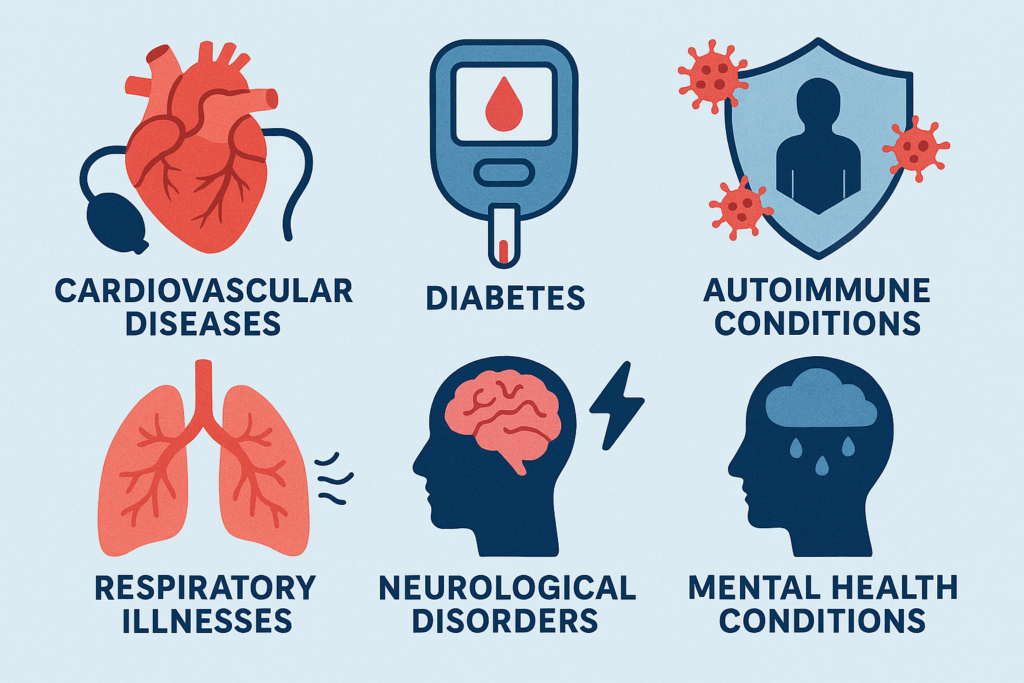
Examples include:
- Cardiovascular diseases like hypertension and heart disease
- Diabetes (both Type 1 and Type 2)
- Autoimmune conditions such as rheumatoid arthritis, lupus, Hashimoto’s thyroiditis, multiple sclerosis, or inflammatory bowel diseases like Crohn’s and ulcerative colitis.
- Respiratory illnesses like asthma
- Neurological disorders like Parkinson’s , Autism, Epilepsy.
- Mental health conditions such as depression or anxiety
Why They Matter
Chronic illnesses don’t just affect physical health. They impact every area of life — from energy levels and productivity to relationships and mental well-being. Many people live with invisible symptoms like fatigue, pain, or brain fog that interfere with daily functioning but go unnoticed by others.
They also place a huge burden on healthcare systems. The CDC reports that chronic diseases are responsible for 7 out of 10 deaths each year in the U.S. and are the leading drivers of the nation’s $4.1 trillion annual healthcare costs.
Not Just an “Old Person’s Problem” Anymore
One of the most concerning trends is how chronic illnesses are showing up in younger adults and even children. Type 2 diabetes, for example, was once called “adult-onset diabetes” — but that label no longer applies. Rising stress levels, poor diet, sedentary behavior, disrupted sleep, and environmental toxins are shifting the disease burden earlier in life.
Why Are So Many Adults Affected?
The rise in chronic illnesses isn’t just a coincidence it’s a result of many overlapping factors that have changed how we live, eat, drink, move, and even sleep. While our genes haven’t changed much in the last few decades in fact, over 99.9% of the human genome has remained stable for thousands of years our environment and lifestyles have transformed dramatically. This mismatch between our ancient biology and the demands of modern life is putting enormous stress on our bodies, and many are struggling to keep up.
1. Processed Diets and Excess Carbohydrates
Modern diets are heavily skewed toward refined carbohydrates — including white rice, bread, sugary snacks, breakfast cereals, and sweetened beverages. These foods cause rapid spikes in blood sugar and insulin levels, placing constant stress on the body’s metabolic systems. Over time, this can lead to insulin resistance, a condition where cells stop responding properly to insulin, forcing the pancreas to work harder and resulting in chronically elevated blood sugar.
Insulin resistance is now recognized as a key driver behind many chronic diseases, including Type 2 diabetes, heart disease, obesity, fatty liver, and even some forms of cancer. Compounding the problem, these ultra-processed foods are often stripped of fiber, healthy fats, and essential nutrients — leaving the body overfed but undernourished. The result is a metabolic environment primed for inflammation, fatigue, and long-term disease progression.
2. Sedentary Lifestyles
Desk jobs, screen time, and reduced physical activity have become the norm. Movement is essential not just for fitness, but for circulation, detoxification, and mitochondrial health. Without regular movement, the risk of obesity, heart disease, and even mental health disorders increases.
3. Chronic Stress and Poor Sleep
Stress isn’t just a mental state — it causes real biological changes in the body. When we experience ongoing stress, our bodies stay in a constant “fight-or-flight” mode, pumping out hormones like cortisol and adrenaline. Over time, this can disrupt everything from blood sugar regulation to digestion, mood, and immune response.
When poor sleep is added to the mix — whether due to insomnia, irregular sleep schedules, or screen exposure before bed — the body loses its chance to repair and recover. Sleep is when vital processes like cellular repair, hormone production, and immune function take place. Without deep, consistent rest, these systems weaken.
This combination of chronic stress and sleep deprivation leaves the body in a “wired and tired” state — mentally exhausted, physically drained, and more vulnerable to chronic disease.
4. Environmental Toxins and Hidden Burdens
We’re now exposed to more environmental toxins than any previous generation — from pesticides and plastics to heavy metals and micro-pollutants in water and air. These toxicants can accumulate in tissues, interfere with cellular processes, and contribute to inflammation and autoimmunity.
5. Metabolic Disruptors Like Deuterium Overload
One emerging factor in chronic disease development is the buildup of deuterium, a heavy form of hydrogen. When deuterium accumulates in the body at higher-than-optimal levels, it disrupts how cells produce energy. This disruption occurs inside the mitochondria, where deuterium interferes with the normal flow of biochemical reactions needed to generate ATP — the energy currency of the body.
This energy disruption has far-reaching consequences. Low cellular energy weakens immune defense, slows down detoxification, and impairs tissue repair — all of which create a favorable environment for chronic diseases to develop and persist. Over time, deuterium overload has been associated with metabolic dysfunction, insulin resistance, increased inflammation, and accelerated aging — key drivers behind many modern chronic conditions.
By disrupting the body’s most fundamental energy processes, deuterium acts as a silent metabolic stressor, pushing the body towards disease over time, especially when combined with poor diet, stress, and environmental toxins.
Rising Deuterium Levels: A Hidden Shift in Our Water
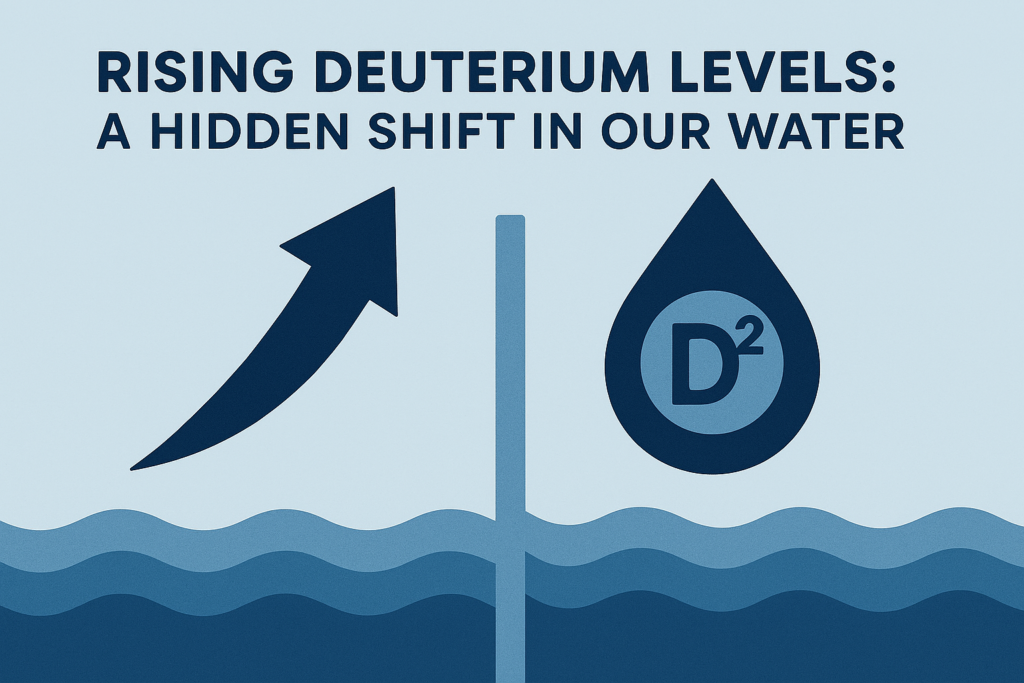
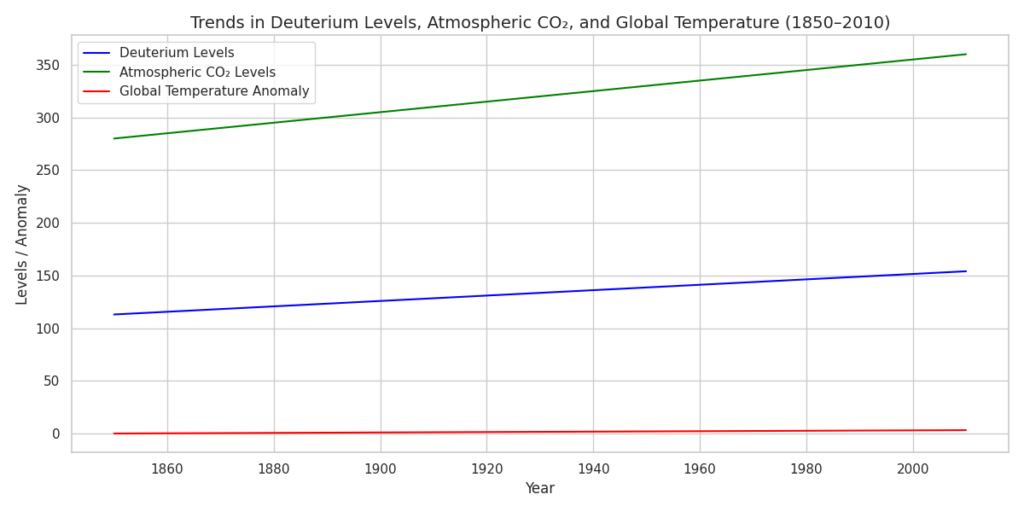
While deuterium the heavier isotope of hydrogen naturally exists in water, its concentration has significantly increased since the industrial era. In 1850, deuterium levels in water sources were around 113 ppm, but by 2010, they had risen to 154 ppm, marking a 36% increase in just over 150 years. This rise aligns closely with the surge in atmospheric CO₂ levels and accelerated global warming. As temperatures climb, the water cycle intensifies leading to greater evaporation, which concentrates deuterium in atmospheric vapor and precipitation. This means that the water we drink today contains significantly higher deuterium levels than what our ancestors consumed. In contrast, isolated communities like the Hunza in northern Pakistan still rely on glacial meltwater with naturally lower deuterium content (around 133 ppm), a level increasingly rare in modern environments. The parallel between rising deuterium and CO₂ levels suggests that industrialization hasn’t just polluted the air it has also quietly altered the fundamental structure of water, with potential consequences for human metabolism and cellular health.
Cellular Healing: A New Era in Chronic Disease Recovery
Chronic illness may feel like a life sentence — but for many, it doesn’t have to be. We now know that the body is remarkably resilient. With the right support, it can often repair, adapt, and even reverse damage once considered irreversible.
1. Real Stories, Real Results
Around the world, individuals with conditions like Type 2 diabetes, autoimmune disorders, and even early-stage neurodegenerative diseases have experienced dramatic improvements through lifestyle-based interventions. By addressing underlying causes — inflammation, mitochondrial dysfunction, poor gut health — many have reduced or even eliminated their need for medications.
While not every case is reversible, quality of life can often improve significantly when the root cause is understood and addressed.
2. The Role of Innovative Therapies
Beyond diet and exercise, emerging science is uncovering new tools that support cellular healing. One such innovation is Deuterium-Depleted Water (DDW) water with a lower concentration of deuterium, a heavy form of hydrogen. High levels of deuterium in the body may interfere with mitochondrial function and energy production.
Early studies and clinical observations suggest that reducing deuterium levels may:
- Improve cellular metabolism
- Support immune function
- Enhance recovery in metabolic and degenerative conditions
DDW is being explored as an adjunctive therapy for chronic illness not a magic bullet, but part of a systems-based strategy that empowers the body to heal itself.
3. Empowerment Through Education
Perhaps the most powerful shift is in mindset: moving from helplessness to awareness, and from fear to action. Understanding how your body works — and what disrupts it — gives you the tools to make better choices. Whether it’s rethinking what’s on your plate, questioning what’s in your water, or advocating for your own care, every small step matters.
Conclusion: Rethinking Recovery, Starting with the Basics
Chronic illness has become one of the most pressing health challenges of our time — but it doesn’t have to define our future. As we’ve seen, many of the factors contributing to disease are linked not just to genetics, but to environment, lifestyle, and hidden cellular imbalances.
Understanding this opens the door to prevention, management, and even reversal. By supporting gut health, reducing inflammation, optimizing sleep and movement, and limiting toxic exposures, we can create the internal conditions the body needs to heal.
Among the most promising frontiers is a deeper look at water — not just its purity, but its molecular composition. Deuterium-Depleted Water (DDW) offers an innovative way to restore metabolic balance at the cellular level, particularly for those facing energy deficits, chronic fatigue, or degenerative diseases. While DDW isn’t a standalone cure, it represents a powerful step toward empowering the body’s natural repair systems.
Whether you’re currently managing a chronic illness or taking steps to prevent one, remember: healing doesn’t happen overnight, but it does happen with consistency, knowledge, and the right tools. And sometimes, it starts with something as simple and essential as the water you drink.